Which format does this retailer want for a listing hero, and what fails most often?
The only specialised AI for home, garden and DIY.
The first imagery engine built only for home, garden and DIY.
- Outperforms ChatGPT, Gemini and Claude on home, garden and DIY. Built for one industry, nothing else.
- It knows your retailer's specification before you type a word.
- The product stays the product. Every frame checked before you see it.

The comparison
The same brief. ChatGPT, Gemini and the Platform. One returns your product.
The brief"A stoneware ring vase, listing cut out on white." Then "the same vase on an oak sideboard at dawn."


ChatGPT and Gemini invent a can. The Platform returns your can, to the retailer's specification, checked.
Faster to a passing frame. Closer on the first pass. Accurate to the product you sell.
Built from the photograph you already have.
Beyond images
Ask it what a range manager would ask.
Ask ChatGPT or Claude and you get a general answer. Ask the Platform and you get the sector's answer: the products, the materials, the seasons, the retailers' written specifications, and what makes a listing pass or fail.
How do two retailers' specifications differ for the same product?
What should a spring garden range have imaged by February, and in which formats?
Name and size these files for upload.
Which of these three frames will pass, and why not the other two?
Compare the two lifestyle scenes against the brand references held for us.
Square, on pure white, the product filling the frame with a clear margin all round, named to their pattern. The usual fail is background value: nearly white reads as grey on their site and is sent back.
Your three heroes pass every check. Shall I name and size them for upload?
Not a chatbot with a camera. A production house, in software, that your team can brief like a conversation.
What comes back is on brand, on spec and ready to upload. The answer, not the working.
Sector knowledge, held for your brand alone.
How it feels
Six screens, brief to library.
What your team sees, in the order they see it.

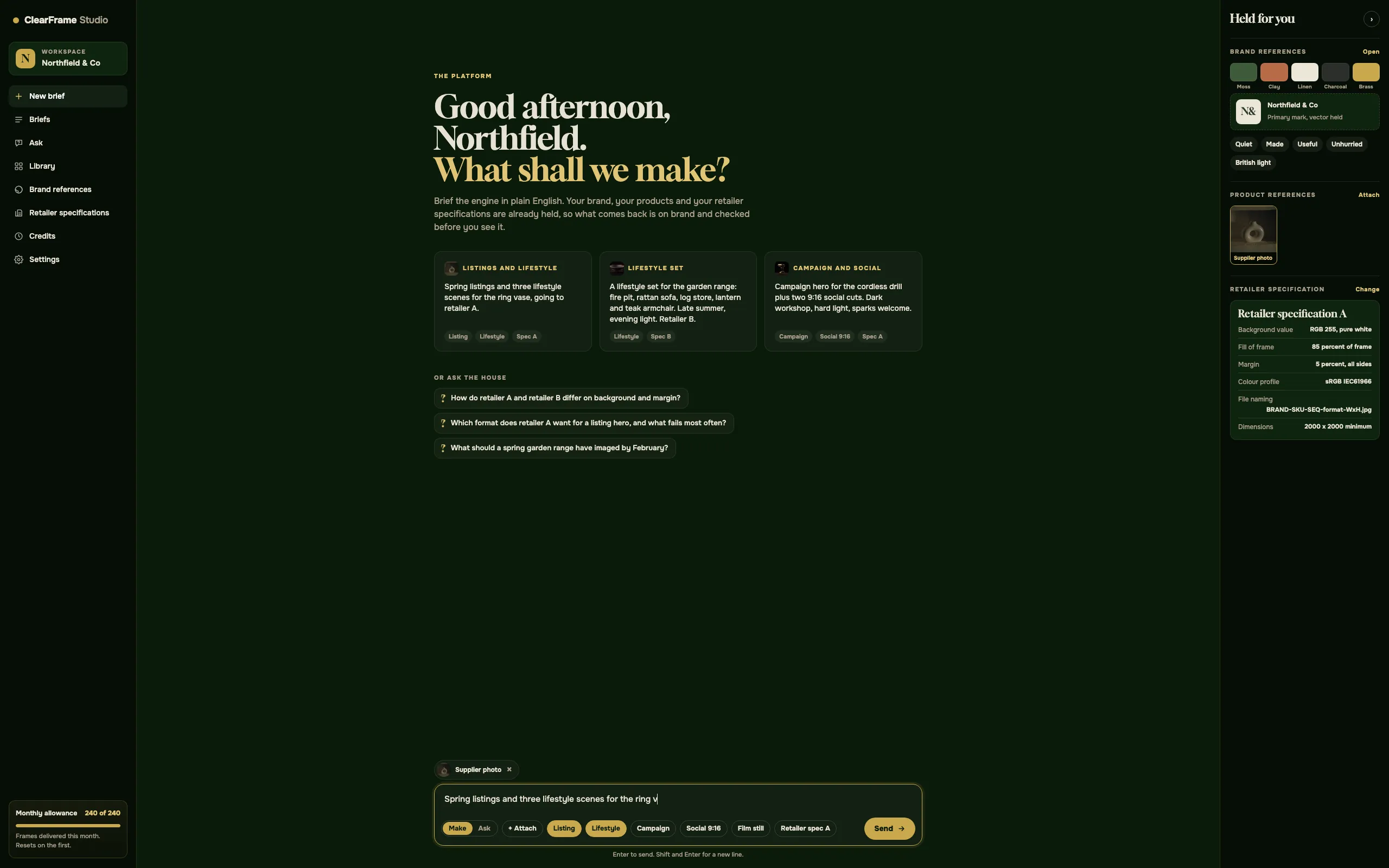
The brief, as you would type it.
Plain English, the way you would say it to a colleague. Which product, which retailer, what the range review needs and when.

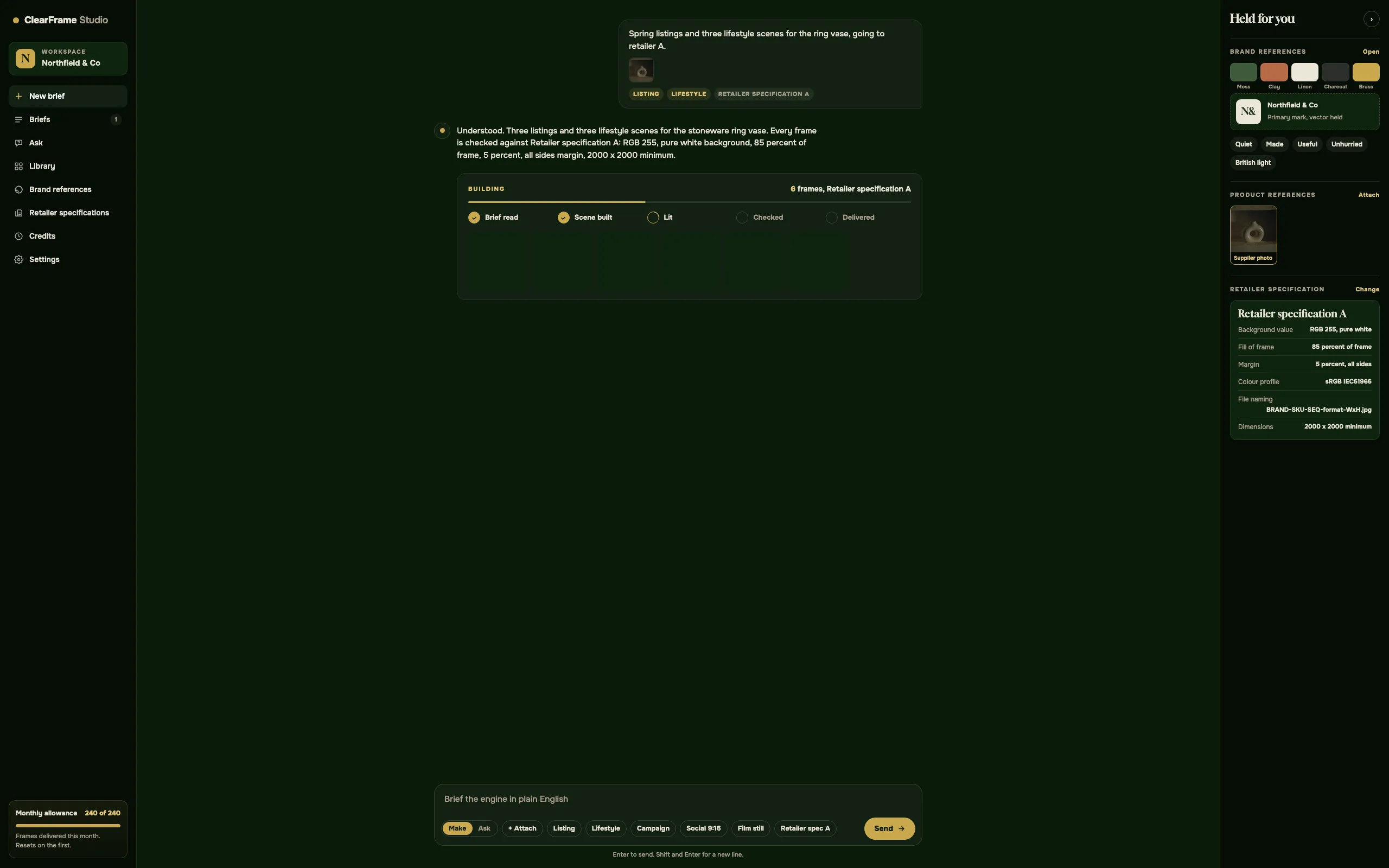
The engine reads the specification back.
Before anything is built, the retailer's written requirement is read back to you. Background value, fill of frame, margin, naming, dimensions.

Built, lit, checked.
The scene is built, the light is decided, and every frame is checked against the specification before it reaches you.

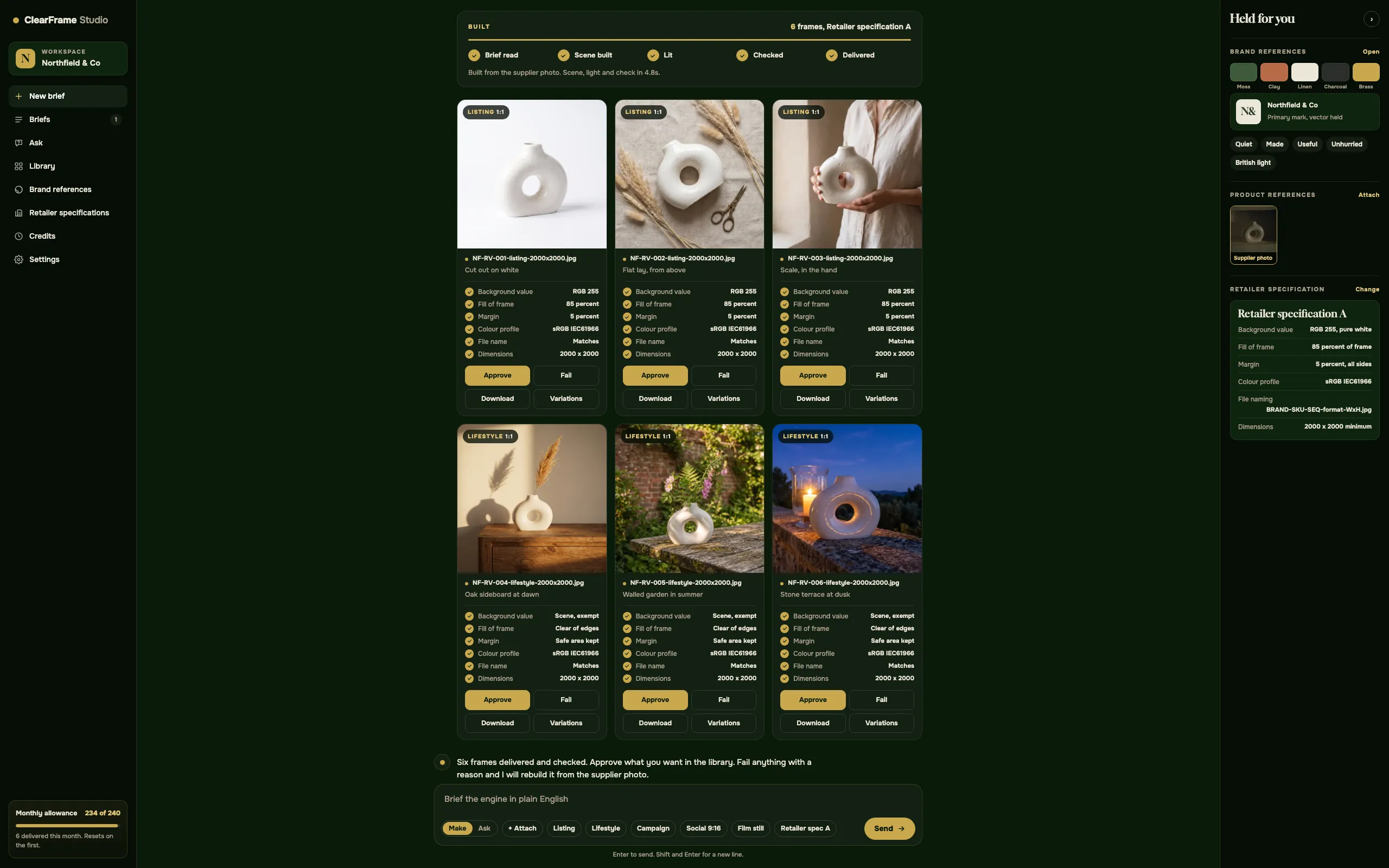
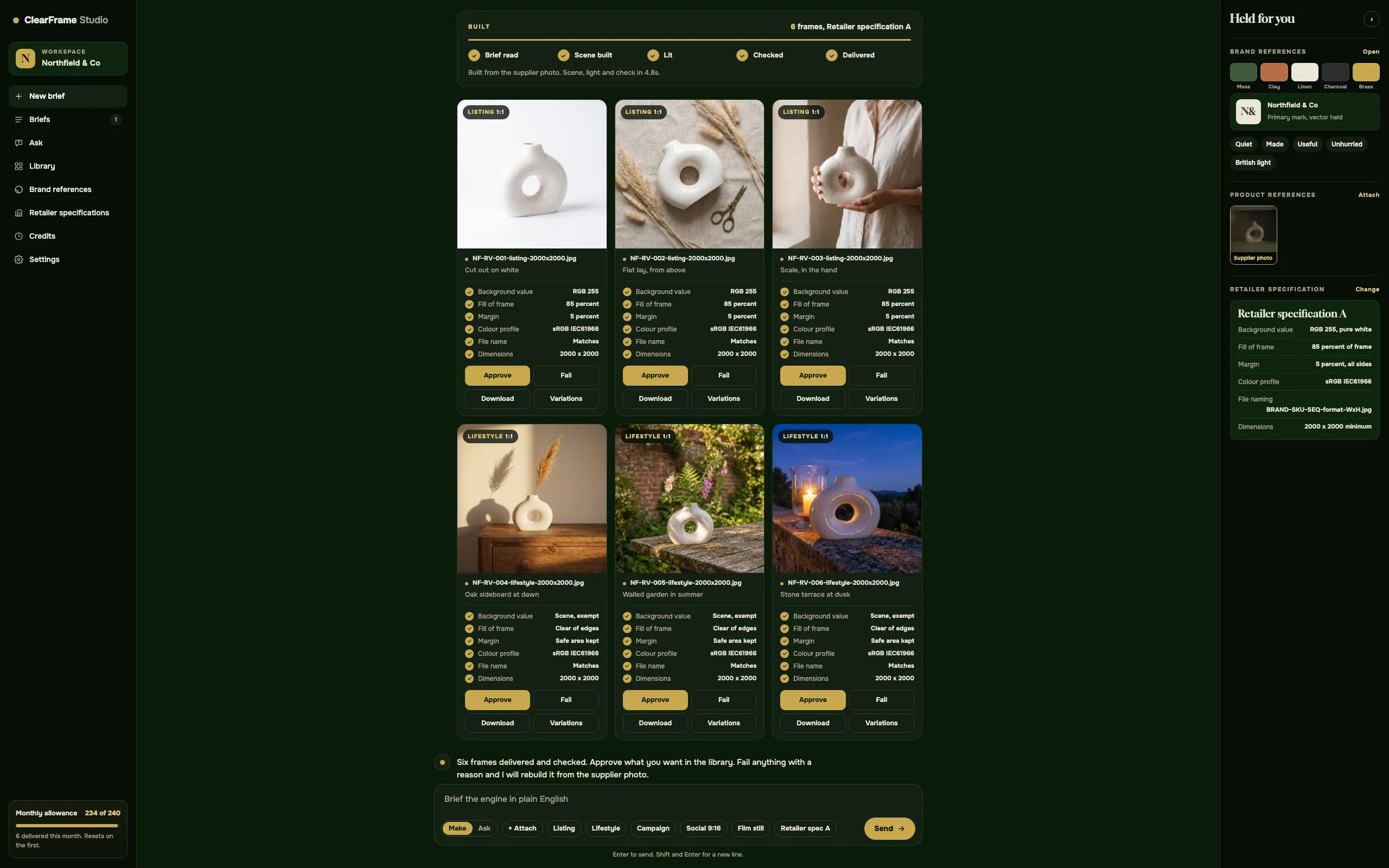
Results with every check shown.
Each frame carries its checks. You see what passed and why, not a thumbnail and a hope.

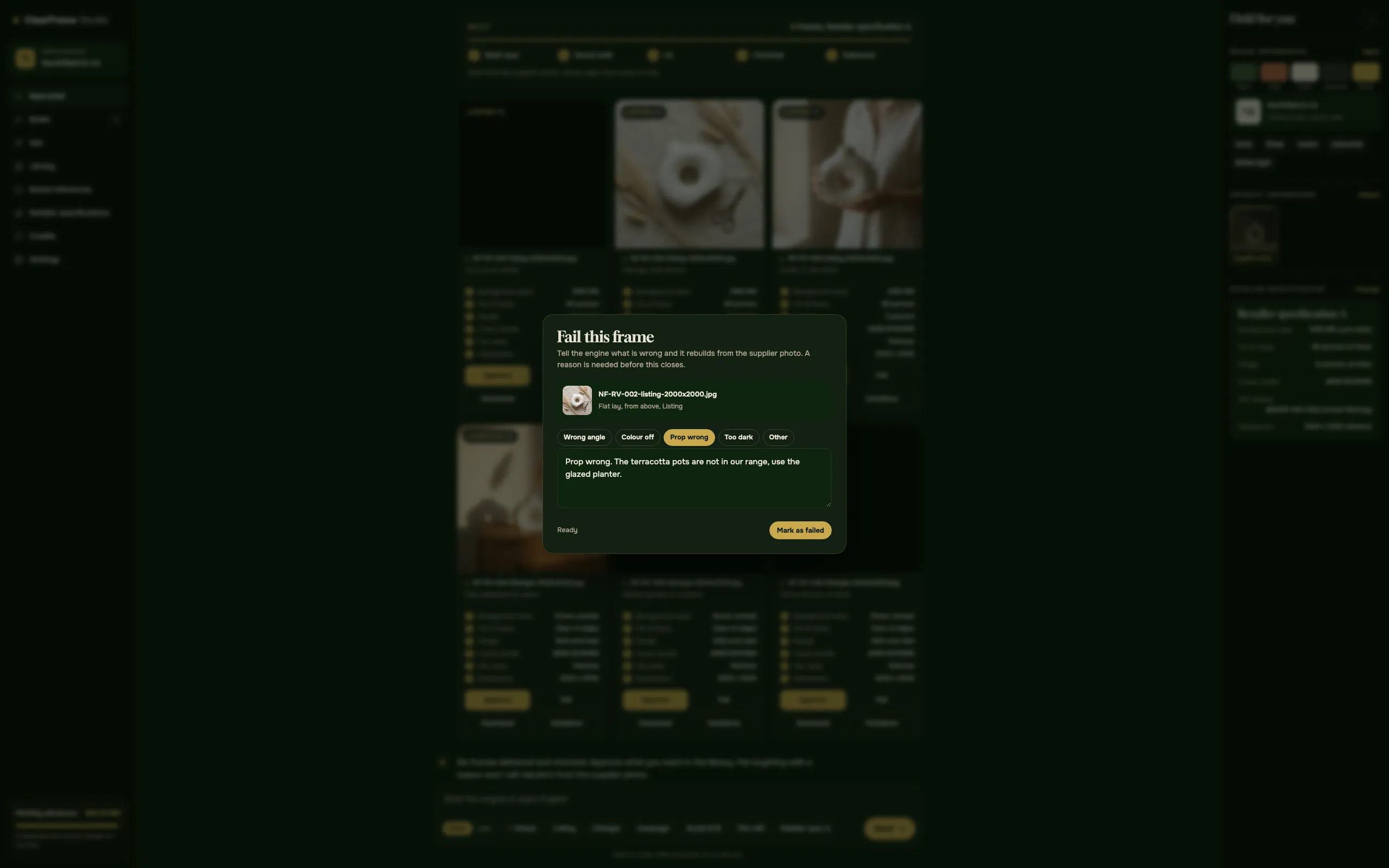
A fail must say why.
Mark a frame F and the reason is required. The next build learns from it, and nothing vague goes back to the engine.

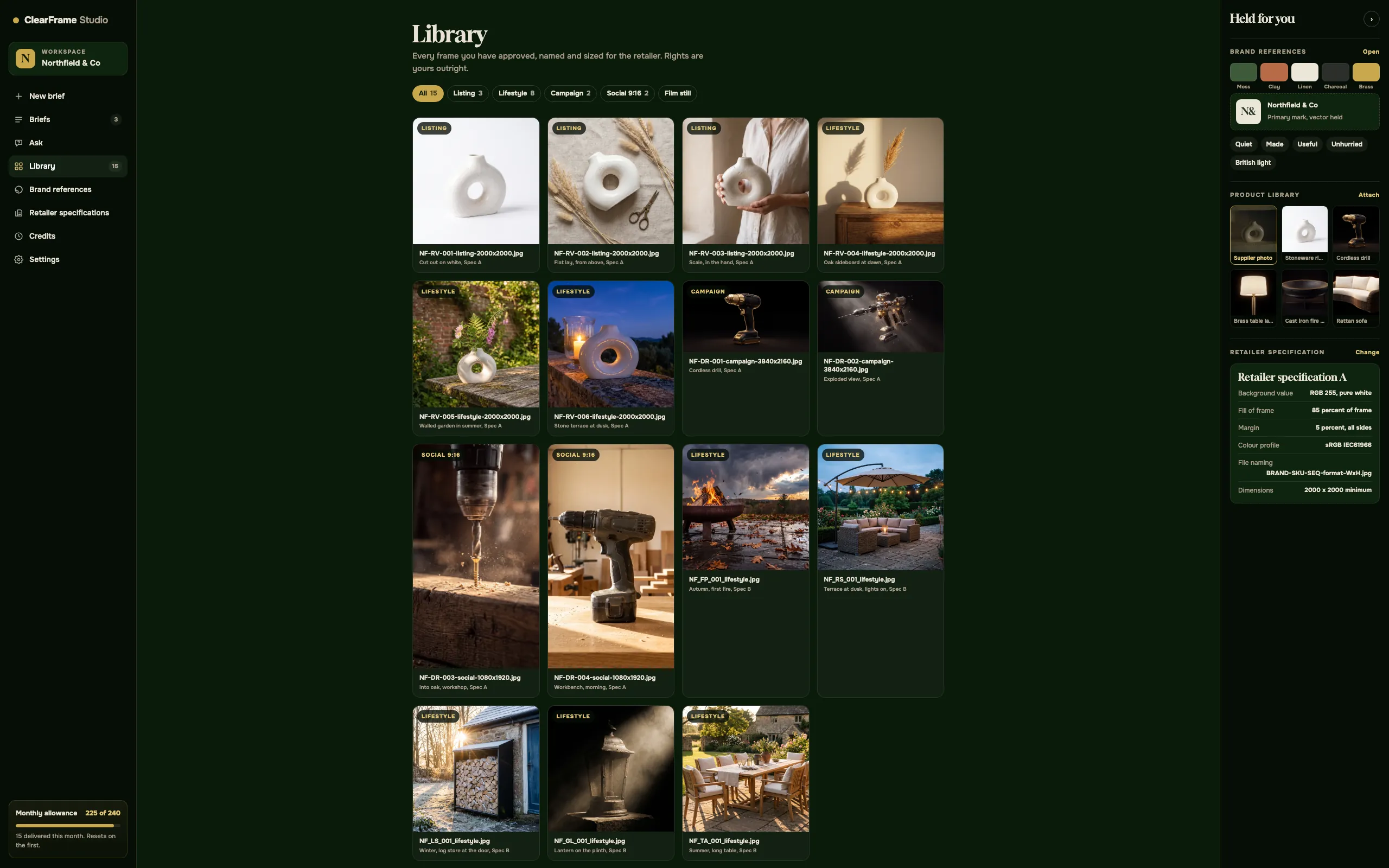
Your library, every format.
Every approved frame, named, sized and ready to upload. One master, then every format your channels use.
A working demo on a sample range. No sign up, nothing saved.
What is held for you
Set up once with us. Then held.

Held
Brand
Palette, finishes, tone, mood board. Every draw comes back on brand, not nearly on brand.

Held
Product
A reference for every SKU, with its dimensions and materials. The product stays the product.

Held
Specification
Each retailer's written requirement, applied and checked before anything is released.
Your team briefs. The engine remembers.
The standard
Six checks on every frame, before you see it.
- Background value
- Fill of frame
- Margin
- Colour profile
- File naming
- Dimensions
Checked against the written document before release, not after rejection.
Exclusivity
By invitation. Never two brands in the same aisle.
Your brand, your products and your retailer specifications, held privately and never shared.
- 01
By invitation
Not self serve. We set it up with you and train your team.
- 02
One brand per category
If your aisle is already spoken for, we say so plainly.
- 03
Held privately
What is held for you is yours. It never informs another brand's work.
We check the aisle, then reply.
Access
Four questions, answered plainly.
Who can use it?+
Your marketing, ecommerce and range teams. Training is included, and The School exists for teams that want to run it properly.
Why invitation only?+
Because it holds your brand and your retailer specifications, and that only works when we have set it up with you. It is never open to a competitor in your category.
Do we own the output?+
Yes. Rights are assigned to you outright, exactly as they are through The Studio.
What if we then want the work done for us?+
That is The Studio, and plenty of clients run both.
Ask for an invitation
Tell us what your range looks like.
Before you write
- Access is by invitation and never to two brands in the same aisle.
- Your brand, products and specifications are held privately.
- Rights to everything made are assigned to you outright.
10. Close
Join the first brands in.
The first of its kind. Built for one industry only.